
How Organic Insider operates: We accept no advertising, we have no paywalls and we make our newsletters free to everyone because vital information about our industry needs to get out to as many people as possible. Please consider becoming an Organic Insider+ subscriber, whether you are an individual or a company. Thank you so much.
As we enter a new year, here are my Top 5 Organic Food Trends for 2026.
• NON-UPF VERIFICATION EMERGES AS A DEFINING SIGNAL
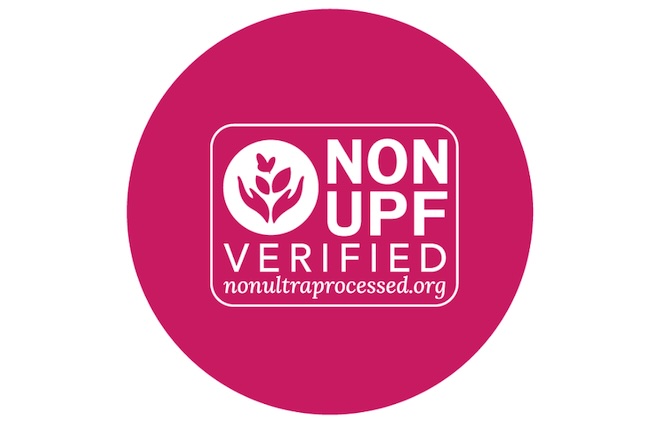
Ultra-processed foods (UPFs) are now top of mind for consumers, and as such, the single biggest mistake organic brands can make heading into 2026 is dismissing the new Non‑UPF Verified certification, set to officially launch this month.
Recent research shows that how processed a food is now matters more to shoppers than organic, Non-GMO, regenerative or sustainability claims — by a significant margin — and nearly three-quarters of U.S. consumers are actively trying to avoid ultra-processed foods. That demand is being reinforced by mounting health evidence, including a 2024 landmark global review linking UPFs to damage across multiple organ systems.
Non-UPF Verified is managed by the same organization behind the Non‑GMO Project, giving it instant credibility and operational maturity.
Over the past several months, 16 brands have participated in the Non-UPF Verified pilot program, with hundreds more on a waitlist. The first verified products are expected to be announced imminently, and the program is sure to draw significant attention at Expo West 2026.
“I have not talked to a single brand that doesn’t understand the importance of addressing UPFs, and it is a trend unlike any we have ever seen in our industry,” said Megan Westgate, CEO of Non-UPF Verified and the Non-GMO Project. “There is no certification fatigue when it comes to UPFs, and even for those companies who are not qualifying, they are reformulating or launching new product lines.”
• A BIG MOVE FOR NUTRIENT DENSITY
Backed by Patagonia and other mission-aligned investors, Edacious is already providing benchmarks at the nutrient level — for whole foods and minimally processed foods — and in the coming months, it will begin releasing higher-order nutritional domain scores, such as fat quality, protein quality, vitamin quality and mineral quality.
These higher-order public benchmark releases will focus on animal products, including beef, dairy, poultry and pork, and the benchmarking will allow for comparisons across production attributes, such as regenerative organic, organic, grass-fed and conventional systems.
Mary Purdy, managing director of the Nutrient Density Initiative, also said that in 2026, “food is medicine” organizations will not only be embarking on their own testing, but they will be conducting clinical trials to determine the relationship between nutrient dense foods and human health outcomes.
However, unlike pesticide residue testing — widely viewed as precise and reproducible — nutrient density testing remains an inexact science, some experts contend. Results can vary by methodology, sampling and interpretation, and there is still much about nutrition science we do not fully understand, particularly at the soil level.
That being said, Edacious and others pursuing this work deserve real credit for advancing the field — particularly in their effort to show that how food is grown can meaningfully influence food quality and, ultimately, consumer choices.
• CIVC INTRODUCES NEW PARADIGM FOR ORGANIC SUPPLY CHAINS
In 2026, one of the most important shifts in organic will be the rise of collaborative, data-driven supply chains — and the Collaborative Integrated Value Chain (CIVC) is emerging as a blueprint.
Now fully operational after overcoming early USDA funding delays, CIVC goes beyond traditional sourcing by offering brands a shared platform for procurement, testing, transparency and storytelling.
Instead of each company independently procuring and testing the same ingredients, CIVC conducts rigorous contaminant analysis once and shares standardized data across participating brands — lowering costs while strengthening credibility.
Furthermore, by contracting directly with organic farmers and controlling regional processing for grains like oats, millet and buckwheat, CIVC not only preserves identity through the supply chain but is able to financially reward farmers for growing clean raw product, thereby creating incentive structures to grow the domestic supply. The initiative is also opening up organic processing channels in the High Plains, which previously did not exist, and is now dehulling organic buckwheat for Lil Bucks, one of its first commercial customers.
“In 2026, we move into our third stage of impact by opening CIVC’s facility for co-packing,” said Colleen Kavanagh, founder and CEO. “The system we’ve built is designed to help multiple values-aligned brands scale together — while promoting purity transparency, helping to narrow the gap between organic and conventional pricing, and expanding organic acreage. It’s a collaborative model that can be replicated in regions across the country.”
• PESTICIDE TESTING MOVES INTO THE MAINSTREAM
In 2026, pesticide testing is set to move from a niche differentiator to a mainstream market expectation — driven not by brands, but by retailers.
For the first time, two major U.S. retailers are making significant investments in pesticide-testing programs for their private-label products. The scale of these retailers makes this shift unprecedented, and the implications for the food system are enormous. Once retailers begin testing at scale, expectations quickly cascade throughout the supply chain.
This momentum has been building for years, but it has accelerated sharply with new regulatory pressure, including California’s AB 899, which mandates heavy metals testing for baby food and toddler products. Together, consumer awareness and regulation are reshaping what “acceptable” now means.
“Eventually the shift by retailers will move to ingredient suppliers, which will quickly move to farmers,” said Henry Rowlands, founder of The Detox Project and a leading global authority on pesticide testing.
As testing moves upstream, transparency will no longer be optional. It will be built into how food is sourced, verified and sold.
• ORGANIC SCHOOL FOOD IS SET TO SCALE NATIONALLY
Several weeks ago, Organic Insider reported on a quiet but consequential shift underway in California: public schools are rapidly increasing purchases of organic fruits and vegetables through the USDA’s DoD Fresh program. What is now becoming clear is that this is not a one-off success — it is a scalable model for the rest of the country.
Driven by coordinated efforts from Friends of the Earth, Conscious Kitchen, Eat Real, the Chef Ann Foundation and other partners, California schools that once had zero access to organic produce are now purchasing nearly $6 million annually. Long-standing procurement barriers have fallen by working directly with state agencies, prime vendors and school nutrition directors.
Importantly, this shift is not being carried by nonprofits alone. Leading organic brands, including Nature’s Path, Stonyfield and Straus, have made significant inroads into schools, and UNFI — the nation’s largest natural and organic distributor — has been actively working with California schools for the past five years.
“If we carry a product and can help our vendor partners get it into school districts, we want to facilitate that,” said Steven Brancamp, vice president of sales, Natural West at UNFI.
This spring, Friends of the Earth will host a national webinar to help other states replicate California’s approach — marking a pivotal moment as organic school food moves from a promising pilot to a repeatable national playbook.
 |
With gratitude, 
Max Goldberg, Founder |


However, U.S. Rep. Chellie Pingree, a Democrat from Maine, expects to see continued efforts to get industry friendly language inserted into legislation, including into the new Farm Bill.
The flavored water brand is now nearly two-thirds of the way to a $15M round, adding new board members from Trousdale Ventures, Ramp and Critical Mass Group.

The EPA, again, fails to follow its own cancer assessment guidelines and ignores health risks from cyclobutrifluram.

The Trump administration just unveiled new dietary guidelines for Americans that call for "prioritizing high-quality protein, healthy fats, fruits, vegetables and whole grains" while avoiding highly processed foods and refined carbohydrates.

State legislators must get this policy reversed.

Could this be a sign of things to come at other supermarkets?

The Maine Organic Farmers and Growers Association said it expects to lose more than $1 million in grant funding from the USDA, which has resulted in staff cutbacks. Very concerning.
While demand for organic food continues to grow, any decline in organic farms is not a good sign.

Also, a total ban of online junk food advertising has come into force as the government attempts to tackle the childhood obesity crisis.
Want to share this newsletter on social media? You can use this link: Newsletter Link