
Delivering the week’s top organic food news
12.24.2025
100% Non-GMO

Criticizing Organic Is Easy — When Toxic Pesticides Aren’t Your Neighbors


THANK YOU: This will be the last Organic Insider newsletter of 2025, and we will return on January 7 with our 2026 trends piece. If our work contributes to your life or business in a positive way, please consider becoming an Organic Insider+ subscriber — if you are not one already. We accept no advertising and rely 100% on individuals and companies that want to support independent organic food journalism. Thank you so much and wishing you a fantastic year ahead!

As we head into the holidays, I wanted to step back from the daily news cycle and share a more personal reflection — one rooted in the reporting I worked on this year and what it revealed about why the work that thousands of people do across the organic industry truly matters.

Over the past few months, I reported on two deeply troubling stories out of Watsonville, California: first, protests urging Driscoll’s — which sells products under conventional and organic labels — to stop spraying toxic pesticides on fields next to schools in Watsonville and convert these farms to organic; second, a subsequent hunger strike by community members to call even further attention to this matter.

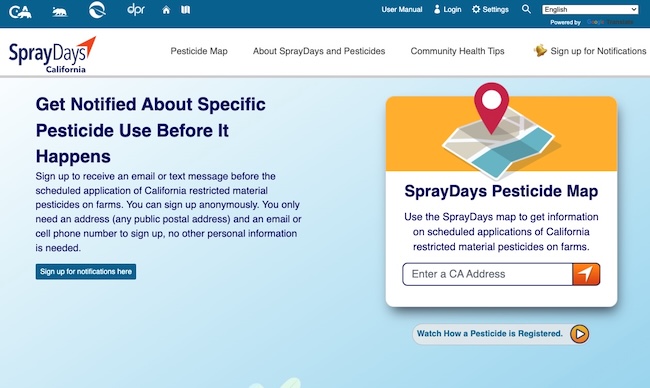
While researching those stories, I learned about a California government pesticide notification website called SprayDays, where the public can get email and text alerts when spraying occurs.
SprayDays California pesticide notification service Organic Insider

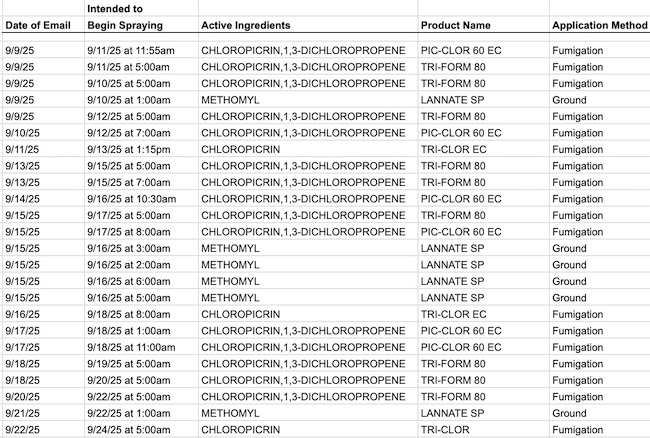
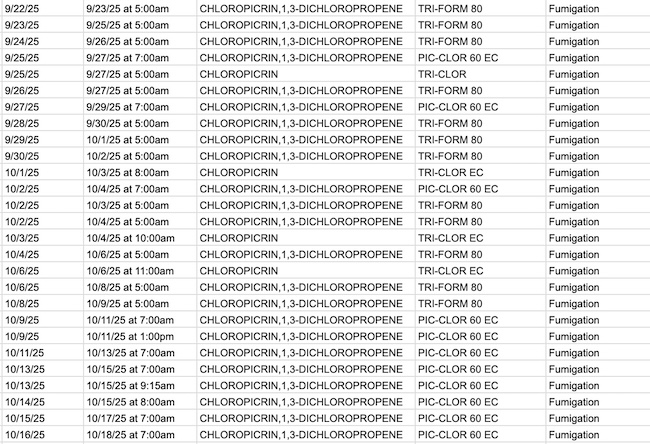
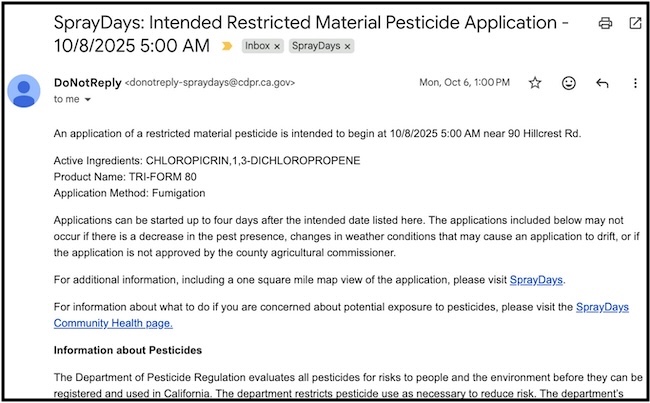
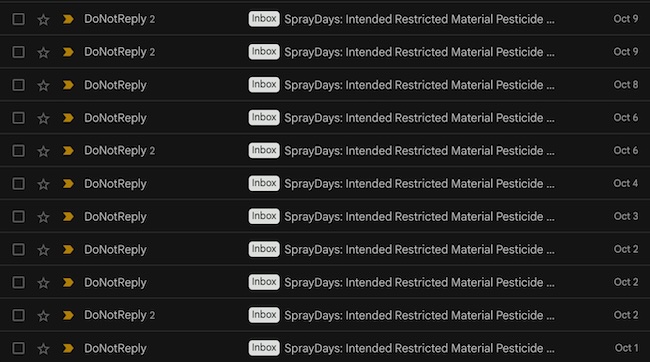
Out of curiosity, I entered the address of 90 Hillcrest Road in Watsonville into SprayDays on September 17, and for four weeks, I received email alerts warning of pesticide applications near that location. (The service stopped sending me alerts on October 16 — either because the website was no longer functioning or the spraying season was over.)

What I received over that month was deeply unsettling.

Approximately six days per week — and quite often, multiple times per day — I was notified that extremely toxic pesticides were being sprayed nearby. The same three chemicals appeared again and again:

— 1,3 Dichloroproprene (banned in 34 countries, probable human carcinogen, tiny exposure over time can cause nose damage, respiratory issues and increased cancer risk)

— Chloropicrin (has been used as a warfare agent, can cause significant respiratory tract injuries)

— Methomyl (categorized as highly to moderately toxic and can cause nausea, confusion, dizziness, and, at very high exposures, respiratory paralysis and death)
SprayDays California pesticide email notification

SprayDays email notification pesticides California

SprayDays California pesticide email notificationSprayDays California pesticide email notification

Even though I was not physically at 90 Hillcrest Road, reading those emails was infuriating and impossible to ignore. I kept thinking about the innocent people who were subjected to this daily barrage of extremely toxic chemicals, drifting through the air near homes, schools and playgrounds, and the grave health problems that may very well await them.

This experience gave me a visceral understanding of what many of the residents in Watsonville — and so many other agricultural communities — must contend with on a daily basis. It also reframed, in the starkest possible way, the endless online debates where organic is dismissed as a “marketing scheme” or a lifestyle affectation by influencers who have never stood downwind of a fumigated field.

For people who don’t live near these farms, pesticide exposure is an abstraction. For those who do, it’s a tangible and bodily reality.

Organic, at its core, is not about virtue signaling or premium branding.

It’s about protecting children who go to school next to sprayed fields. It’s about farmworkers and families who breathe this air year after year. It’s about choosing a food system that doesn’t normalize collateral damage.

Receiving those SprayDays alerts changed how I understand this work. It reaffirmed why organic matters — and why telling these stories matters.

As we step into the holidays, I hope this reflection gives pause. Because organic isn’t just about what’s on our plates. It’s about the kind of world we’re willing to accept — and the one we’re still fighting to build.

With gratitude,

Max Goldberg, Founder

This Week's Quick Hits

Quick Hits

* This Pennsylvania retirement community serves farm-to-table meals and has its own organic farm.


* The Specialty Food Association announced the launch of the Community Career Studio at next month’s Winter FancyFaire* 2026 in San Diego, and Scott Rice of Natural Careers will be there and assisting with this initiative.


* How Nature’s Path pioneered organic breakfast cereal 40 years ago.


* Forager Project has released its 2025 Impact Report, the company’s first report of its kind.


* The Organic & Natural Health Association’s 11th Annual Conference, taking place January 20-22 in Ft. Lauderdale, will address policy, integrity and innovation.


* The BBC recently visited SIMPLi’s Regenerative Organic Certified® farming communities in Peru.


* Mackenzie Feldman, founder of Re:wild Your Campus, was named to the Forbes’ 30 under 30 List for Social Impact.


* The recently canceled National Organic Standards Board fall meeting will now take place virtually January 13-14.


* Banana water, explained.


New Organic Products

New Organic Products

Alexandre Family Farms organic A2 eggnog grassfed

Homegrown Eggnog from Alexandre Family Farm

Only offered during the fall and winter holiday seasons, the organic Homegrown Eggnog from Alexandre Family Farm is made with the company's grass-fed, regenerative A2 whole milk and pasture-raised eggs, along with spices such as nutmeg, clove, turmeric and cinnamon. Available at select retailers in the Southwest, Rocky Mountain and Western regions, as well as Azure Standard on the East Coast.
Organic essential oils from Natural Grocers

Essential Oils from Natural Grocers

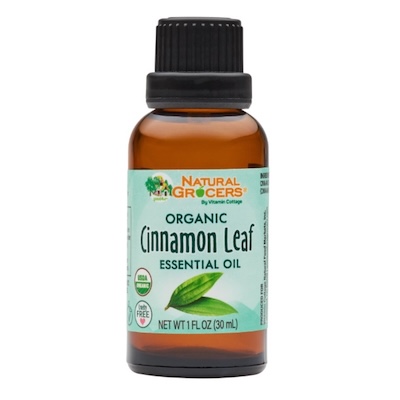
Natural Grocers has added a new private-label line of essential oils to its body care offerings. USDA certified organic, responsibly sourced, cruelty-free and produced using an alcohol-free process, the oils come in varieties such as cinnamon, frankincense and patchouli. Available at all 168 of the retailer's locations nationwide.
Rancho West organic alcoholic and non-alcoholic beer glyphosate-free

Alcoholic and Non-Alcoholic Beer from Rancho West

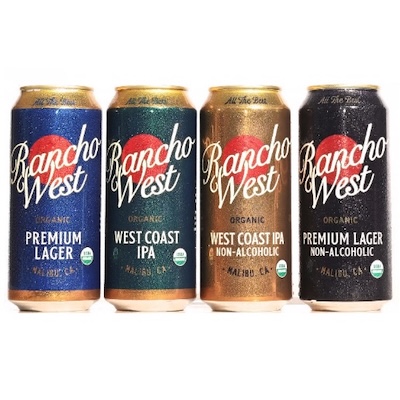
Rancho West has become the first beer ever to receive The Detox Project’s Glyphosate Residue Free certification. All of its SKUs -- Premium Lager, Premium Non-Alcoholic Lager, West Coast IPA and Non-Alcoholic West Coast IPA – are USDA certified organic, and they are available at select retailers, hotels and restaurants in California and Nevada, including Whole Foods Market, Sprouts, Erewhon, Total Wine, MGM Las Vegas and Momofuku.
organic holiday blend cosecho no. 20 from pachamama coffee farmers

Cosecha No. 20 Holiday Blend from Pachamama Coffee Farmers

Honoring the twentieth harvest since the founding of its 100% farmer-owned cooperative, Pachamama Coffee Farmers has introduced Cosecha No. 20 -- a limited-edition, USDA certified organic holiday blend. It features regeneratively farmed beans from Ethiopia’s Sidama region, the highlands of Peru, and the lush mountains of Mexico.
This Week's News Items

Weekly News Summaries

First Course
BusinessWire

Laird Superfood buys Navitas Organics for $38.5M

The acquisition gives Laird a much deeper presence in organic.

Friends of the Earth

Friends of the Earth releases its 2025 Bee-Friendly Retailer Scorecard

This year, Sprouts became only the second company to score in the “A” range, joining Whole Foods Market.

AgFunder News

Symbrosia raises $5.8M to Scale Methane-Busting Seaweed Additive

By Elaine Watson

The Hawaii-based company is moving closer to commercialization with SeaGraze -- its certified organic, red seaweed-based feed supplements -- after raising capital from new strategic investors Idemitsu and One Small Planet.

The New Lede

EPA dismisses New Cancer Warning on Atrazine

By Brian Bienkowski and Carey Gillam

U.S. regulators are dismissing new research by international cancer experts that warns of links between cancer and the widely used pesticide atrazine, deriding the team of cancer scientists and echoing atrazine maker Syngenta in its criticism.

Second Course
BusinessWire

NextFoods raises $10M Series 3

NextFoods Inc., parent company to Cheribundi and GoodBelly, announced the close of its $10 million Series 3 funding round led by ECP Growth.

The Western Producer

Selling GMO Tomato Seeds to Canadian Gardeners is ‘Reckless’

By Geralyn Wichers

Selling genetically-modified purple tomato seeds to home gardeners could raise the risk of contamination of organic vegetable varieties and hamper farmers’ ability to save their own seed, says a group of advocates.

Grocery Dive

Why Specialty Grocers are Thriving Post-Pandemic

By Peyton Bigora

High prices, a renewed focus on health and wellness, and a bifurcated economy over the last five years have created the perfect storm for premium grocers.

Third Course
USDA

USDA will Conduct a 2025 Organic Survey

The survey will be mailed this month and will collect new data on organic production, marketing practice, income and expenses in the United States.

Food Navigator

Packaging Trends to Watch in 2026

By Deniz Ataman

The Guardian

California Farms Applied Millions of Pounds of PFAS 'Forever Chemicals' to Key Crops, Study Finds

By Tom Perkins

According to a report from EWG, the chemicals are added to pesticides that are sprayed on crops such as almonds, pistachios, wine grapes, alfalfa and tomatoes.


Want to share this newsletter on social media? You can use this link: Newsletter Link

The material in this newsletter is copyrighted and may be reprinted by permission only. All requests must be in writing. Please use our contact form to request republication rights.

Share This Newsletter

Share This

Search Newsletter Archive

Newsletter Archive

This Week's Quick Hits

Quick Hits

* This Pennsylvania retirement community serves farm-to-table meals and has its own organic farm.


* The Specialty Food Association announced the launch of the Community Career Studio at next month’s Winter FancyFaire* 2026 in San Diego, and Scott Rice of Natural Careers will be there and assisting with this initiative.


* How Nature’s Path pioneered organic breakfast cereal 40 years ago.


* Forager Project has released its 2025 Impact Report, the company’s first report of its kind.


* The Organic & Natural Health Association’s 11th Annual Conference, taking place January 20-22 in Ft. Lauderdale, will address policy, integrity and innovation.


* The BBC recently visited SIMPLi’s Regenerative Organic Certified® farming communities in Peru.


* Mackenzie Feldman, founder of Re:wild Your Campus, was named to the Forbes’ 30 under 30 List for Social Impact.


* The recently canceled National Organic Standards Board fall meeting will now take place virtually January 13-14.


* Banana water, explained.


Newsletter Topics

Organic Insider