Delivering the week’s top organic food news
5.6.2026
100% Non-GMO

Retailers Take The Lead On 'Regenerative' — As Shoppers Struggle To Decode The Label


How Organic Insider operates: We accept no advertising, we have no paywalls and we make our newsletters free to everyone because vital information about our industry needs to get out to as many people as possible. Please consider supporting our work, whether you are an individual or a company. Thank you so much.

“Regenerative” products that have been sprayed with glyphosate can be purchased at supermarkets across the country.

By contrast, the USDA organic certification strictly prohibits glyphosate and similar toxic pesticides.

With no federal definition of “regenerative agriculture,” no accepted industry standard and many competing certifications, retailers have stepped in as the de facto police of the term.

WHOLE FOODS MARKET FORMALIZES ITS POLICY

The regenerative agriculture claims policy of Whole Foods Market currently approves five certifications:

  • Regenerative Organic Certified®
  • Regenified
  • Ecological Outcome Verified
  • Certified Regenerative by A Greener World
  • Soil and Climate Initiative

Of those five, only Regenerative Organic Certified uses USDA organic certification as its baseline. The other four regenerative certifications allow synthetic inputs, to varying degrees, including glyphosate, a chemical that peer-reviewed research has determined is detrimental to soil health.

“Rather than prescribing a single set of practices, we evaluate regenerative certifications based on whether they’re delivering meaningful ecological results; we believe this approach is the most effective way to advance regenerative agriculture at scale,” said Nathan Cimbala, a Whole Foods Market spokesperson.

“To maintain consumer trust, retailers should be leaders in ensuring that ‘regenerative’ has meaning, and that means backing labels that eliminate toxic pesticides,” said Kendra Klein, PhD, deputy director of science at Friends of the Earth, which just published a report titled Regenerative Food Labels: What’s Behind the Claim?

A NEW COALITION IS FORMING

A different coalition, led by IFOAM North America and Natural Grocers, the Colorado-based retailer with over 170 stores across 22 states, has started convening stakeholders to build consensus around a minimum regenerative standard for retail food packaging. The conversation began at Expo West 2026 and continued last week with the first public workgroup session — focused on synthetic inputs — drawing 100+ attendees from the U.S., Canada, South America, Europe and India.

“We believe it is a betrayal of trust if we carry products displaying regenerative claims when they may actually harm the environment and public health,” said Alan Lewis, vice president of advocacy and governmental affairs at Natural Grocers. “Regenerative claims with little substance may be used to capture organic sales, which could have a negative impact on farmers, brands and supermarkets that promote and protect the organic food system.”

The coalition has already engaged dozens of retailers and trade groups nationwide, and it will be hosting 6-7 more sessions through the rest of the year on a variety of topics, including ruminant livestock, tillage, manure and biosolids, hogs and poultry, and seed sourcing. The coalition is also collecting written comments to refine the standard.

THE STAKES ARE ENORMOUS

With the litany of regenerative certifications flooding the marketplace, it makes sense, then, that retailers would take on a greater role. The intervention is warranted.

Major chemical companies — including Bayer and Syngenta — are adopting “regenerative” language to market their own farmer programs and inputs.

But the details tell the real story.

While research from agricultural giant ADM says that 63% of consumers would pay more for products grown with regenerative practices, the Vypr Regenerative Farming report has found that approximately 62% of consumers do not know what regenerative farming means.

The question is: what exactly would they be paying for?

With gratitude,

Max Goldberg, Founder

This Week's Quick Hits

Quick Hits

* My speech from The People vs. Poison rally in Washington, D.C. last week.


* TIME magazine named Dr. Bronner’s as one of its 10 Most Influential Social Good Companies of 2026.


* Suja Organic released findings from its inaugural MORE-ning Report, a nationwide survey revealing Americans’ nutritional habits in the morning.


* Lotus Foods released its 2025 Impact Report, highlighting progress across climate, water and farmer livelihoods.


* The animal proteins from StarWalker Organic Farms are now in California’s Tahoe Truckee Unified School District.


* Hugh Kent, a Real Organic Project blueberry farmer, on “the science of life” on an organic farm.


* How a coconut yogurt experiment became a cult-favorite grocery phenomenon.


* The Functional Mushroom Council expands with new members and innovative products.


* Davines Group and Rodale Institute announced that Rachel Kulchin of Blue Heron Farm is the second annual recipient of The Good Farmer Award U.S.


* Frontier Co-op CEO Tony Bedard on why second chance hiring is smart business.


* Conscious Kitchen, the non-profit advancing fresh, organic, locally sourced meals and revolutionizing public school food, is one of four finalists for the 2026 Food Planet Prize.


* What if the best team-building didn’t happen in a conference room…but in an organic garden?


New Organic Products

New Organic Products

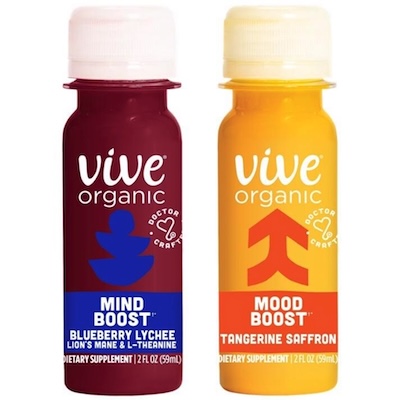
Mind Boost and Mood Boost Wellness Shots from Vive Organic

Mind Boost and Mood Boost Wellness Shots from Vive Organic

Vive Organic has expanded its wellness shot line with the launch of Mind Boost and Mood Boost. Mind Boost pairs green tea with L-theanine, bacopa and functional mushrooms for focus, while Mood Boost combines saffron, 5-HTP and adaptogenic mushrooms for mood support. USDA certified organic and made without added sugar or juice concentrates, they are available at Kroger stores and banners nationwide.
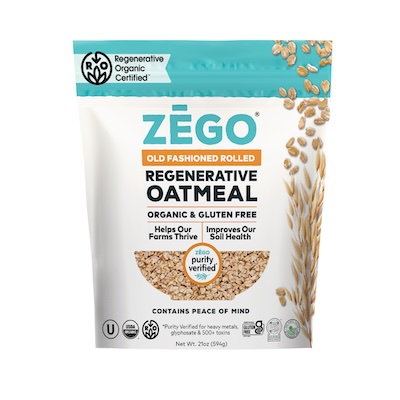
Regenerative Organic Certified® Oats from ZEGO Foods gluten free tested for chemicals and glyphosate

Regenerative Organic Certified® Old Fashioned Rolled Oatmeal from ZEGO Foods

The Regenerative Organic Certified® Old Fashioned Rolled Oatmeal from ZEGO Foods is tested for over 500 other pesticides (with no measurable glyphosate detected), heavy metals, gluten and allergens, and it is manufactured in a facility free from the top 14 allergens, including gluten and corn. USDA certified organic, grown in the U.S. and available for purchase on the company's website and at select retailers nationwide.
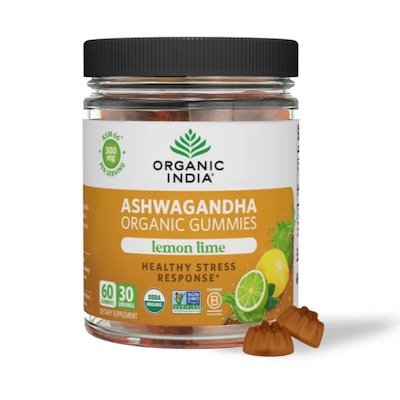
Organic Ashwagandha Gummies Stress Relief. 300mg of potent KSM-66® Ashwagandha root extract to relieve daily stress from Organic India

Ashwagandha Gummies from Organic India

Organic India has expanded its supplement line with the launch of Ashwagandha Gummies. Each two-gummy serving contains only 3g of sugar and delivers 300mg of KSM-66® Ashwagandha, a clinically studied, full-spectrum root extract used to support the body's healthy stress response and sleep. USDA certified organic, vegan and packaged in a recyclable glass jar.
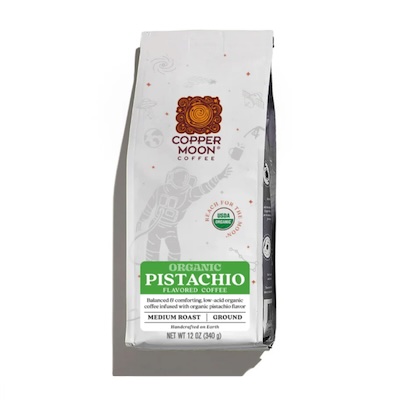
Vanilla and Pistachio Flavored Coffees from Copper Moon Coffee USDA certified organic

Vanilla and Pistachio Flavored Coffees from Copper Moon Coffee

Copper Moon Coffee, a family-owned Indiana roastery, has announced the addition of two new USDA certified organic flavored coffees -- Vanilla (medium roast with creamy notes) and Pistachio (offering a subtle nutty sweetness). The blends are available on the company's website and at select retail locations throughout the country, including Costco and Sam’s Club.
This Week's News Items

Weekly News Summaries

First Course
OrganicEye

Trump/Rollins Administration Illegally Guts Organic Oversight at the USDA

By Mark Kastel

As mandated by Congress, USDA Secretary Brooke Rollins has failed to appoint, in a timely manner, five members to fill vacancies on the 15-member National Organic Standards Board.
National Organic Coalition

House passes Farm Bill with Modest Organic Gains, Major Gaps Remain

Modest organic wins include a higher EQIP Organic Initiative cap of $200,000 and better dairy data — while leaving major gaps like flat $24 million NOP funding and no certification cost relief.

Investigate Midwest

Bayer promised EPA Administrator Lee Zeldin ‘A Small Thanks’ for Removing Cancer Warnings about Roundup

By Sky Chadde

Found in email obtained through a Freedom of Information Act request, it was discovered that Lee Zeldin has a conflict of interest with Bayer.

Second Course
Grocery Dive

Report: Online Grocery Sales will Near $500B by 2028

By Jeff Wells

In the report by FMI —The Food Industry Association and NielsenIQ, it also underscored the challenges grocers face in capitalizing on e-commerce, including stiff competition and shoppers’ focus on small baskets.

Food Business News

Hydration is Becoming a Key Functional Beverage Trend

By Will Newton

New data from PepsiCo, Inc. suggests that, while 95% of American consumers understand the importance of hydration, over 150 million consumers regularly report signs of mild to moderate dehydration, including unregulated body temperature, low cognitive focus and increased thirst.

The New Lede

Monsanto’s Big Moment – All Eyes on Supreme Court Hearing Over Pesticide Law

By Carey Gillam

“If there is no potential for liability, corporations can do whatever they want, sell whatever they want and create harms that they don’t have to pay for. That’s really what we’re talking about,” said Danielle Fugere, president of As You Sow, referring to this monumental case.

Third Course
Politico

House strikes Pesticide Language from the Farm Bill

By Grace Yarrow and Rachel Shin

A massive victory over the chemical companies in the Farm Bill.

Capital Press

Judge ends ‘Interminable Litigation’ over Organic Livestock Rules

By Mateusz Perkowski

A federal judge has dismissed a nine-year lawsuit challenging the USDA's 2018 withdrawal of organic livestock and poultry welfare rules, ruling the case moot after most of those standards were reinstated under the Biden administration in 2023.

Top Class Actions

SweetLeaf Class Action Lawsuit claims Monk Fruit ‘Organic’ Sweetener is Mostly Erythritol

According to the lawsuit, SweetLeaf Monk Fruit Organic Sweetener — marketed as "sweetened by nature" with "nothing artificial" — is actually 99.13% erythritol, with monk fruit extract comprising less than 1% of the product.


Want to share this newsletter on social media? You can use this link: Newsletter Link

The material in this newsletter is copyrighted and may be reprinted by permission only. All requests must be in writing. Please use our contact form to request republication rights.

Share This Newsletter

Share This

Search Newsletter Archive

Newsletter Archive

This Week's Quick Hits

Quick Hits

* My speech from The People vs. Poison rally in Washington, D.C. last week.


* TIME magazine named Dr. Bronner’s as one of its 10 Most Influential Social Good Companies of 2026.


* Suja Organic released findings from its inaugural MORE-ning Report, a nationwide survey revealing Americans’ nutritional habits in the morning.


* Lotus Foods released its 2025 Impact Report, highlighting progress across climate, water and farmer livelihoods.


* The animal proteins from StarWalker Organic Farms are now in California’s Tahoe Truckee Unified School District.


* Hugh Kent, a Real Organic Project blueberry farmer, on “the science of life” on an organic farm.


* How a coconut yogurt experiment became a cult-favorite grocery phenomenon.


* The Functional Mushroom Council expands with new members and innovative products.


* Davines Group and Rodale Institute announced that Rachel Kulchin of Blue Heron Farm is the second annual recipient of The Good Farmer Award U.S.


* Frontier Co-op CEO Tony Bedard on why second chance hiring is smart business.


* Conscious Kitchen, the non-profit advancing fresh, organic, locally sourced meals and revolutionizing public school food, is one of four finalists for the 2026 Food Planet Prize.


* What if the best team-building didn’t happen in a conference room…but in an organic garden?


Newsletter Topics

Organic Insider